XBeach Model Predicts Storm Impacts on Beaches and Dunes
Alireza Gharagozlou (below) is a doctoral student in the Department of Civil, Construction, and Environmental Engineering at NC State University. He studies how to connect predictions of beach and dune erosion to community-wide flooding and serves with Casey Dietrich on NC State’s Coastal & Computational Hydraulics Team. North Carolina Sea Grant has supported their work.
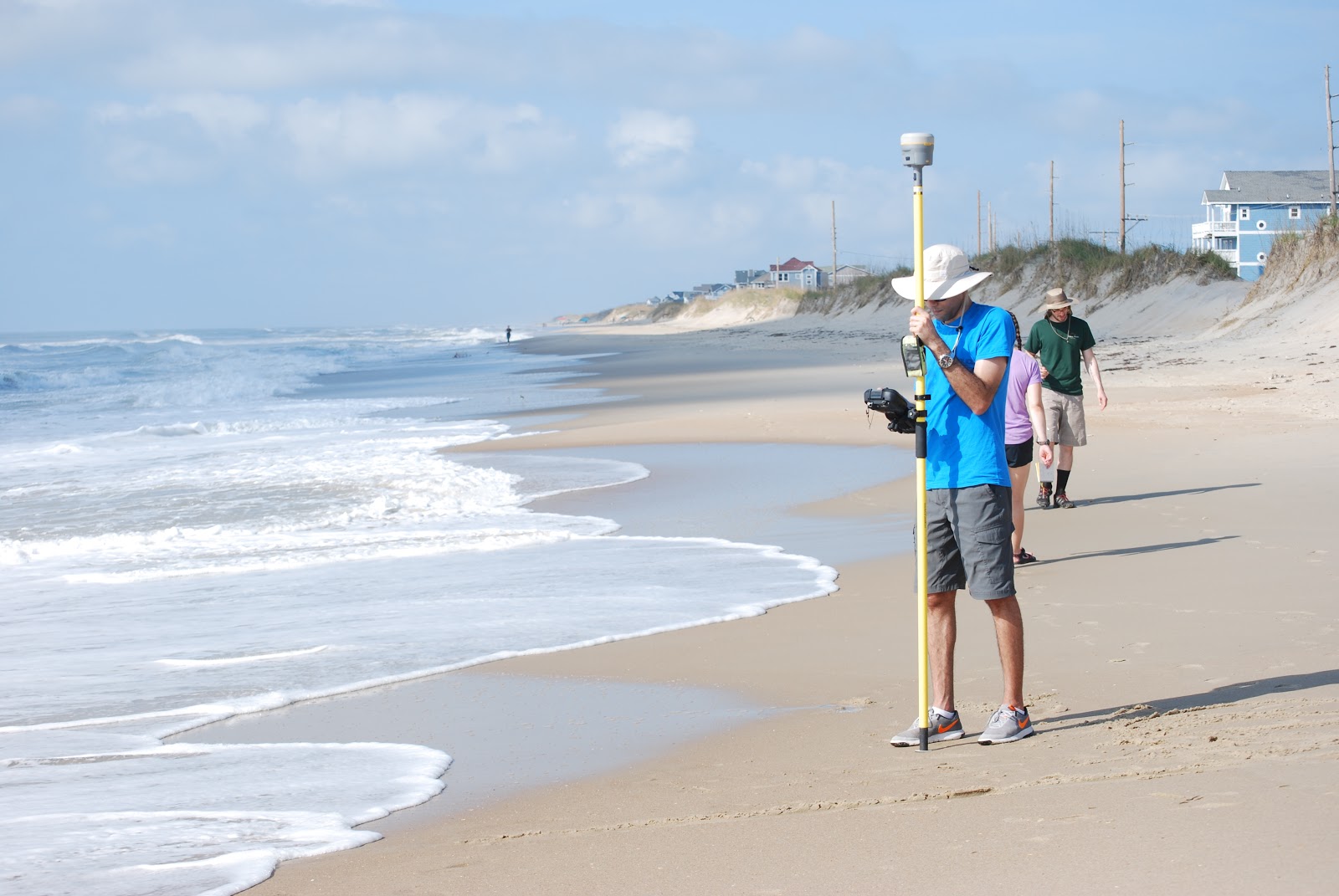
Alireza surveying the beach profile near Hatteras, NC, with RTK-GPS after Hurricane Florence.
2019/04/26 – NC Sea Grant Coastwatch Currents
Model Predicts Storm Impacts on Beaches and Dunes

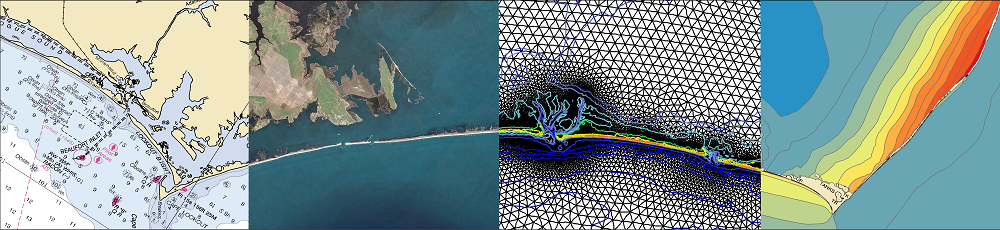
During storms, strong waves and currents can erode beaches and dunes and create low-lying areas vulnerable to flooding. We use field surveys and a computer model called XBeach to predict this erosion, as well as to understand its interactions with storm-driven flooding of larger regions.
Computer models allow us to see how the storm surge and waves impact the beach over time, and which locations are vulnerable to large-scale damage. Good predictions of such storm impacts help emergency managers take better-informed measures to protect coastal areas. Understanding vulnerabilities also instructs highway access design and residential area planning.
We used the XBeach computer model on more than 30 kilometers of Hatteras Island between Avon and Rodanthe to explore how to connect erosion predictions to larger areas. Could XBeach cover more of the island, yet still provide good erosion predictions at beach and dune scales? And how could we connect erosion predictions to other models for storm surge and flooding?
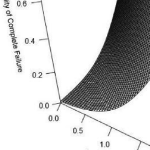 Multi-hazard hurricane data-based fragility models are able to represent multiple predictor variables, be validated based on observed data, and consider variability in building characteristics and hazard variables. This paper develops predictive hurricane, multi-hazard, single-family building fragility models for ordered categorical damage states (DS) and binary complete failure/non-complete failure using proportional odds cumulative logit and logistic regression models, respectively. In addition to their simplicity, these models are able to represent multiple hurricane hazard variables and include variable interactions, thus improving model fitting and damage prediction. Surveys of physical damage in coastal Mississippi following Hurricane Katrina (2005) and high-resolution numerical hindcast hazard intensities from the Simulating WAves Nearshore and ADvanced CIRCulation (SWAN + ADCIRC) models are used as model input. Prediction accuracy is expressed in terms of cross-validation (CV) and evaluated using leave-one-out cross-validation (LOOCV).