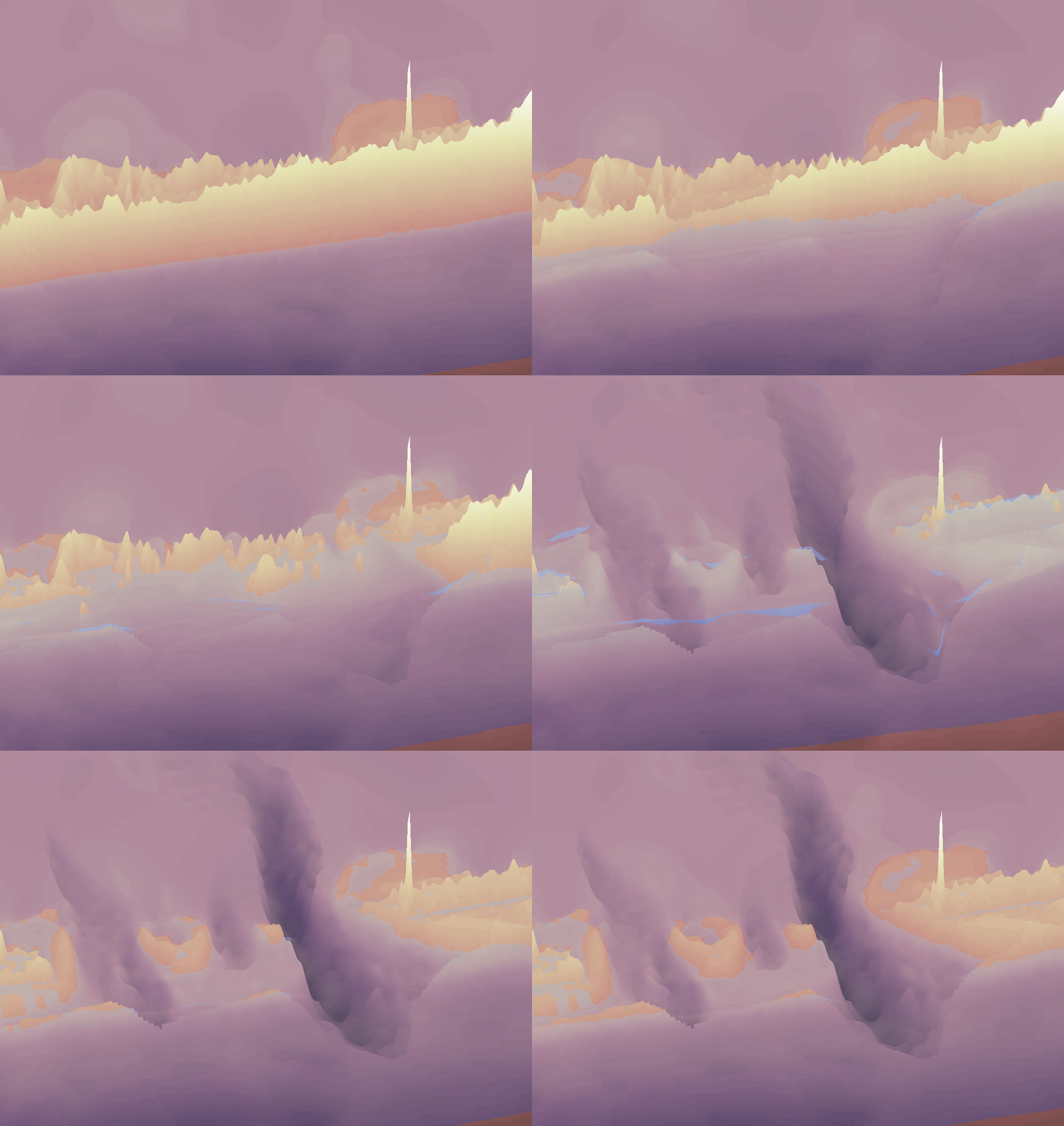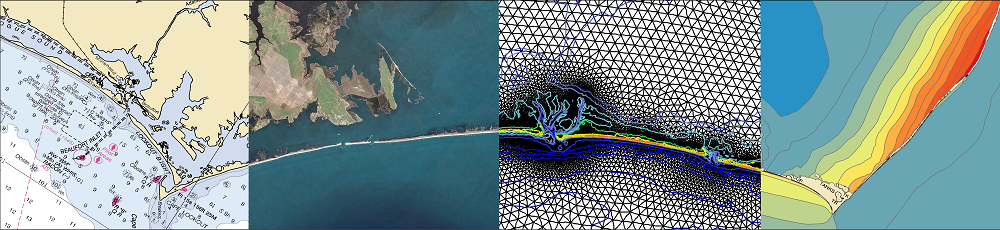
This animation shows the storm-driven dune erosion and breaching on a barrier system. This is part of Alireza’s erosion and breaching modeling research.

This animation shows the storm-driven dune erosion and breaching on a barrier system. This is part of Alireza’s erosion and breaching modeling research.
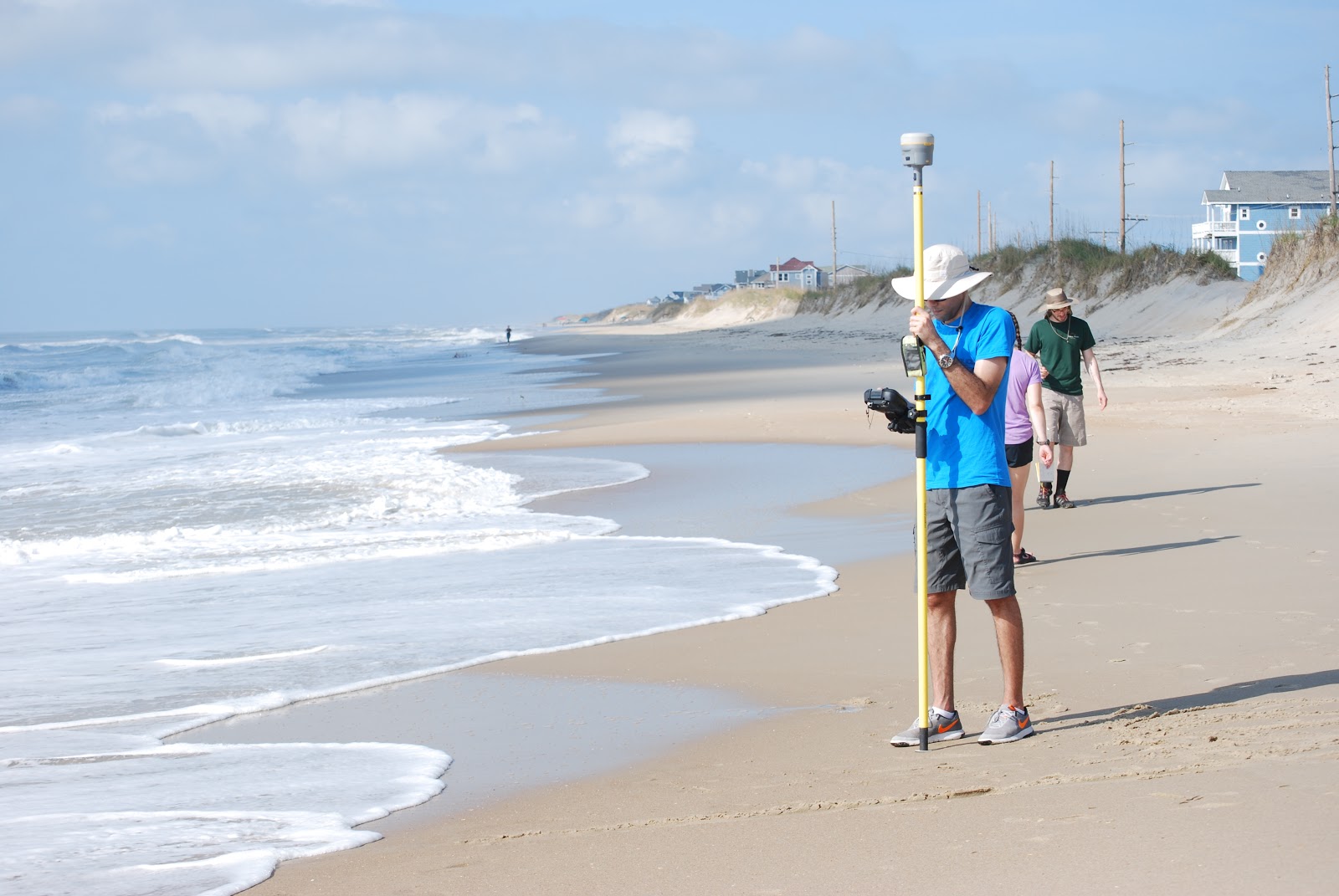
Alireza Gharagozlou (below) is a doctoral student in the Department of Civil, Construction, and Environmental Engineering at NC State University. He studies how to connect predictions of beach and dune erosion to community-wide flooding and serves with Casey Dietrich on NC State’s Coastal & Computational Hydraulics Team. North Carolina Sea Grant has supported their work.

Alireza surveying the beach profile near Hatteras, NC, with RTK-GPS after Hurricane Florence.
2019/04/26 – NC Sea Grant Coastwatch Currents
Model Predicts Storm Impacts on Beaches and Dunes
During storms, strong waves and currents can erode beaches and dunes and create low-lying areas vulnerable to flooding. We use field surveys and a computer model called XBeach to predict this erosion, as well as to understand its interactions with storm-driven flooding of larger regions.
Computer models allow us to see how the storm surge and waves impact the beach over time, and which locations are vulnerable to large-scale damage. Good predictions of such storm impacts help emergency managers take better-informed measures to protect coastal areas. Understanding vulnerabilities also instructs highway access design and residential area planning.
We used the XBeach computer model on more than 30 kilometers of Hatteras Island between Avon and Rodanthe to explore how to connect erosion predictions to larger areas. Could XBeach cover more of the island, yet still provide good erosion predictions at beach and dune scales? And how could we connect erosion predictions to other models for storm surge and flooding?
We are pleased to announce that we have had several faculty promoted during this year in recognition of their excellent contributions to research and teaching.
Dr. Casey Dietrich was promoted to Associate Professor with tenure. Dietrich, who leads the Coastal and Computational Hydraulics Team has developed computational models that predict storm surge and coastal flooding. He teaches courses in fluid mechanics and coastal engineering.
Dr. Casey Dietrich, an assistant professor in the Department of Civil, Construction, and Environmental Engineering (CCEE), leads the Coastal and Computational Hydraulics Team and develops computational models that predict storm surge and coastal flooding. Using the model ADCIRC, the team makes predictions about how high sea waters will rise, which areas will be flooded and for how long. These predictions are made for the entire coastline, and then his team visualizes the flooding at the scales of individual buildings and coastal infrastructure. During Florence, Dietrich’s team and collaborators acted as liaisons for state emergency managers to aid their decision making.
“The models are just one data point among many, but they’re helpful in understanding hazards and used to make predictions in real time — partly to make decisions about evacuation, where to deploy resources after, safe places to put emergency vehicles and water supplies,” he said.
The state emergency managers are able to use the flooding predictions to get immediate estimates on damages, which helps communities that are figuring out how much recovery will cost.
After Hurricane Matthew in 2016, Dietrich and his colleagues improved the models’ ability to forecast encroaching water along shorelines. Post-Florence, Dietrich said the research focus is to speed up the model and allow for more permutations to see what might happen if a storm slows down or shifts direction.

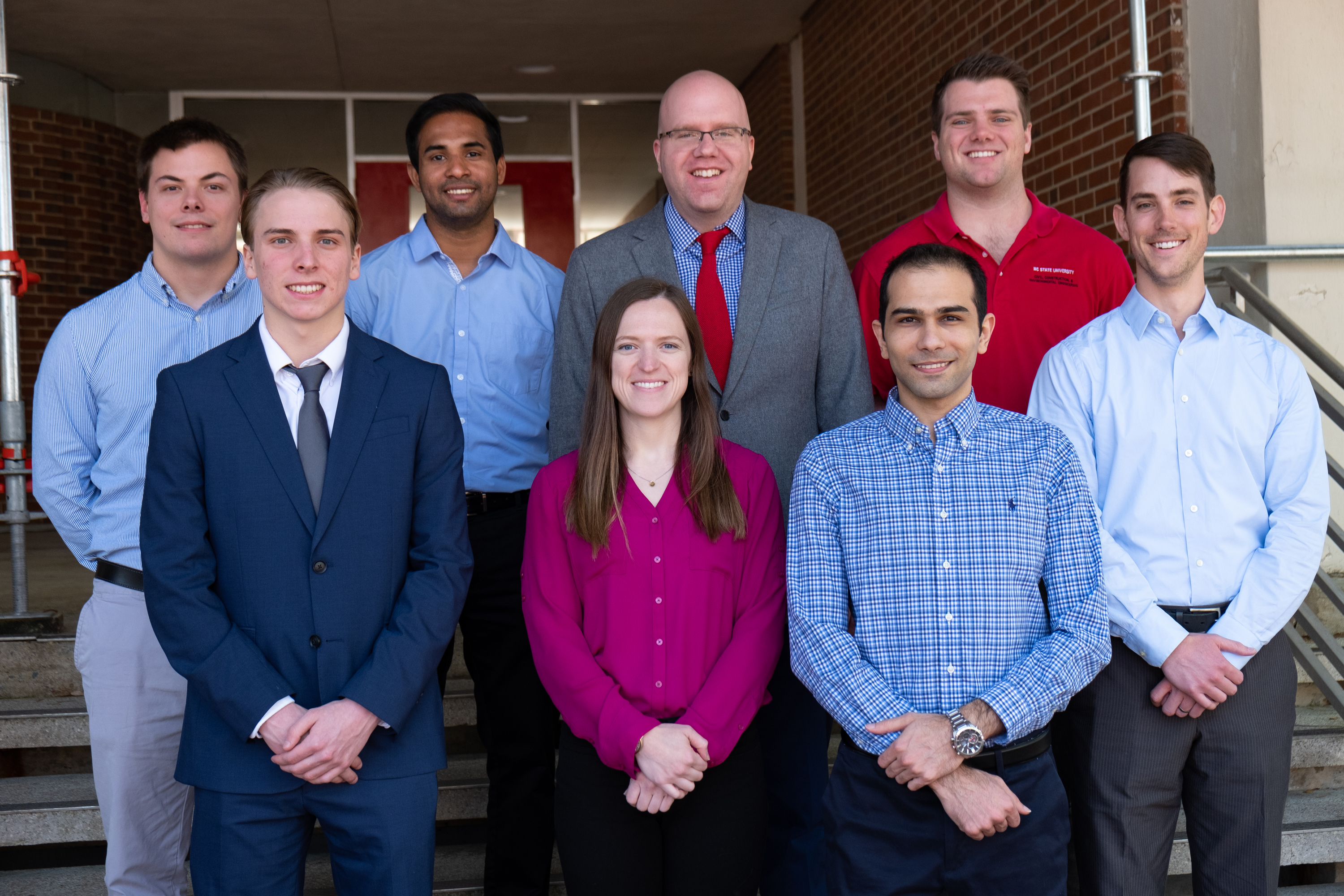
Front (left to right): Carter Howe, Autumn Poisson, Alireza Gharagozlou, and Johnathan Woodruff. Back (left to right): Tucker Fulle, Ajimon Thomas, Casey Dietrich, and Carter Rucker. Not shown: Chloe Stokes.

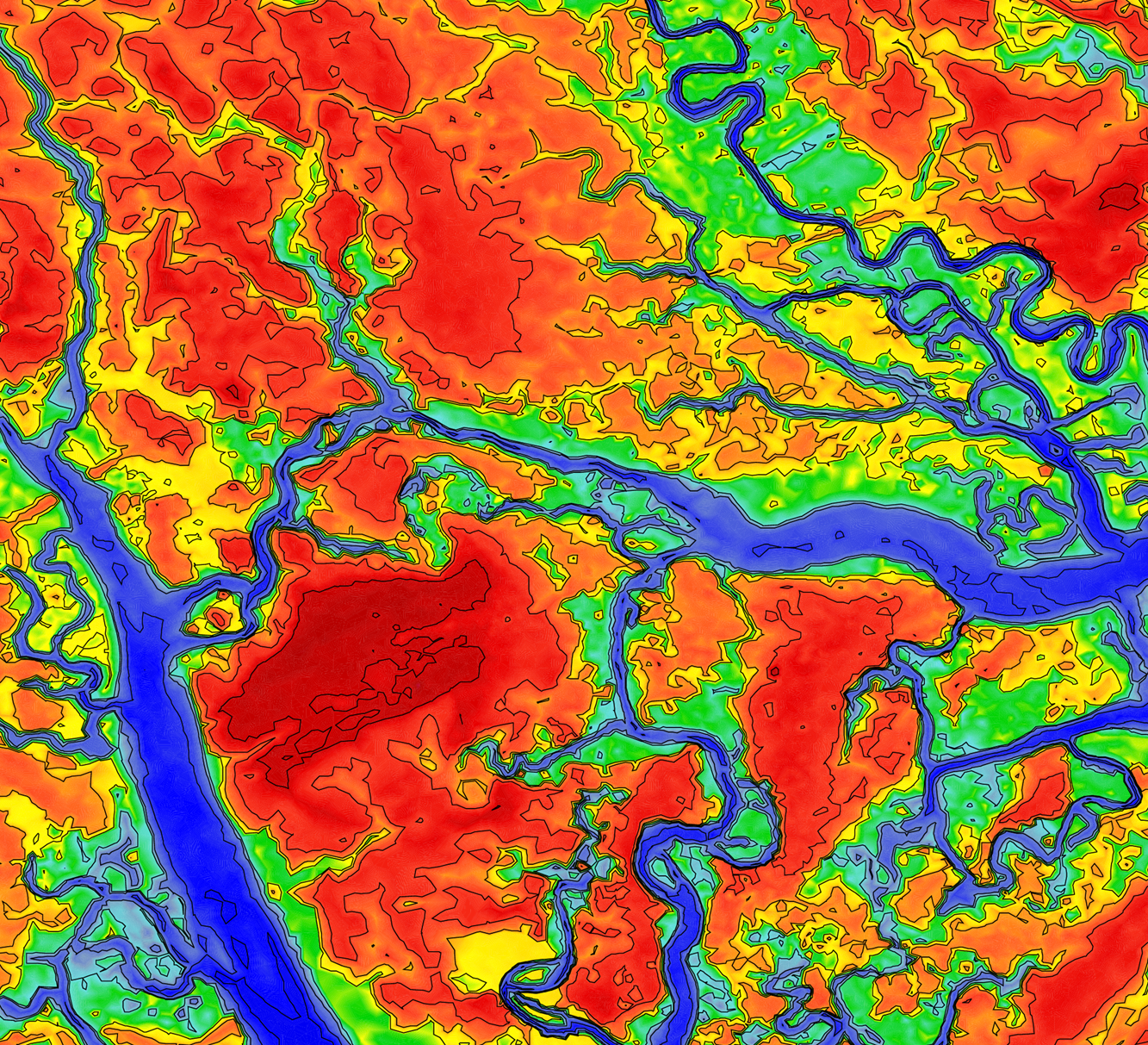
We should share more pretty images from our research, including this image of coastal floodplains and river channels. This is part of a larger mesh from Ajimon Thomas’s PhD work.
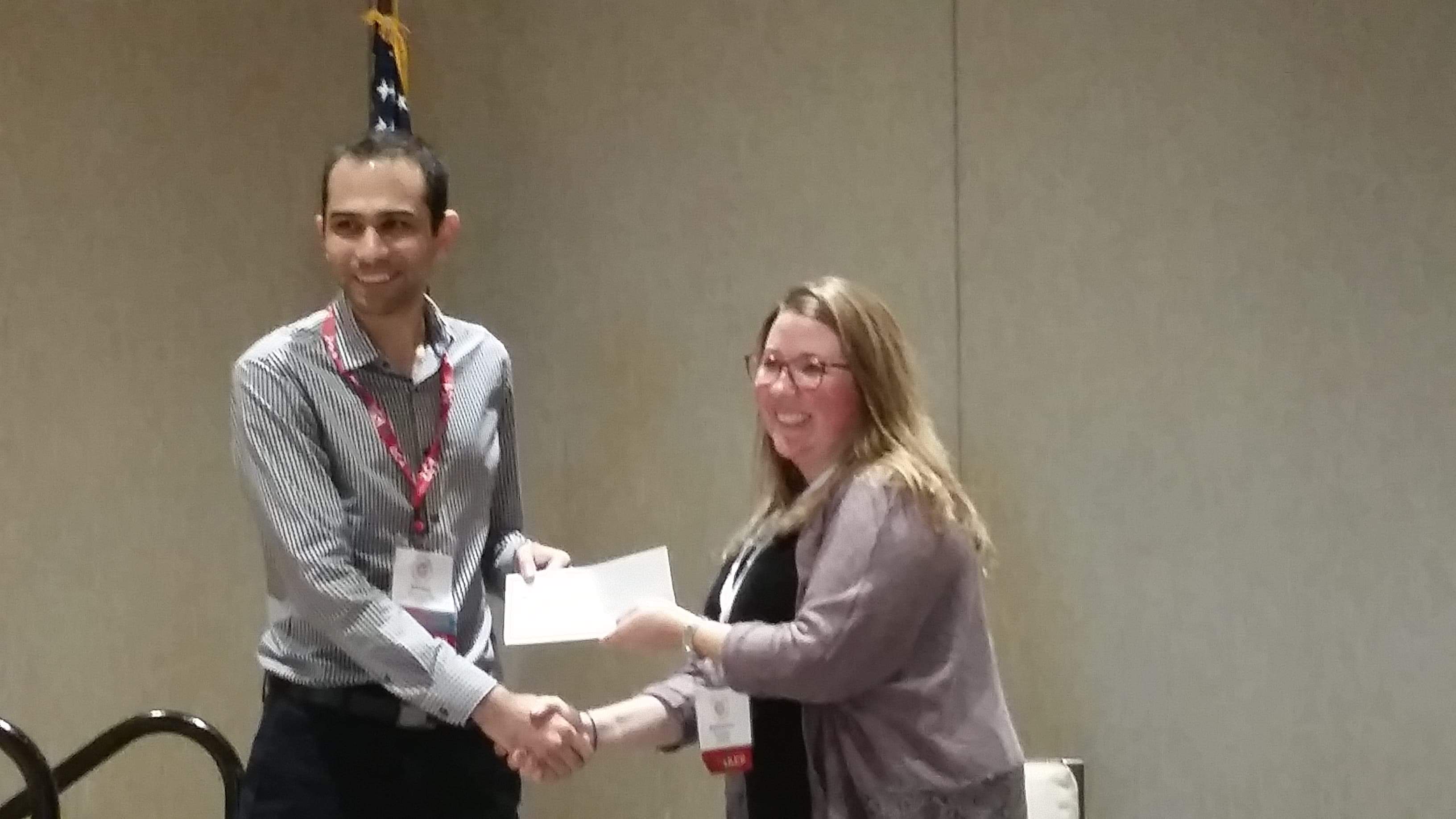
Ph.D. student Alireza Gharagozlou won the Student Educational Award at the ASBPA National Coastal Conference 2018. This award is given annually to an undergraduate or graduate student who, through his or her research, is furthering the state of the science of coastal systems as it relates to the goals and mission of the ASBPA. Congrats to Alireza!

Alireza accepts the Student Educational Award during the awards luncheon at the ASBPA National Coastal Conference.

Members of the NCSU coastal engineering team celebrating the successful PhD defense by Rosemary Cyriac.