
Hydrodynamic models are used for a variety of purposes, such as the modeling of hurricane storm surges, the study of tidal circulation patterns, and the planning of naval fleet operations. One such hydrodynamic model is ADCIRC (ADvanced CIRCulation), which was developed more than 20 years ago and has been refined continuously by researchers across North America. ADCIRC is based on the shallow water equations and includes many of the features necessary to model complex hydrodynamic systems. However, some of these features were implemented in an attempt to solve specific problems, and their behaviors were never rigorously assessed. For instance, the model uses a wetting and drying algorithm to simulate the ebb and flow of tides in coastal regions. This behavior is important in many applications, and it must be modeled correctly. This research thesis will: (1) refute an attack on the usefulness of the finite volume method for computing mass balance errors, (2) lay the groundwork for a future study that will automate the placement of grid points based on a minimization of local mass balance error, (3) implement and assess the wetting and drying algorithm in one-, two-, and three-dimensional versions of the ADCIRC model, (4) identify a set of optimal parameters for wetting and drying simulations, (5) prove that recent updates to the wetting and drying algorithm were beneficial, and (6) show that smaller mass balance errors are obtained when they are computed for each vertical element in the water column.
JC Dietrich (2005). “Implementation and Assessment of ADCIRC’s Wetting and Drying Algorithm,” University of Oklahoma.

 A coupled system of wind, wind wave, and coastal circulation models has been implemented for southern Louisiana and Mississippi to simulate riverine flows, tides, wind waves, and hurricane storm surge in the region. The system combines the NOAA Hurricane Research Division Wind Analysis System (H*WIND) and the Interactive Objective Kinematic Analysis (IOKA) kinematic wind analyses, the Wave Model (WAM) offshore and Steady-State Irregular Wave (STWAVE) nearshore wind wave models, and the Advanced Circulation (ADCIRC) basin to channel-scale unstructured grid circulation model. The system emphasizes a high-resolution (down to 50m) representation of the geometry, bathymetry, and topography; nonlinear coupling of all processes including wind wave radiation stress-induced set up; and objective specification of frictional parameters based on land-cover databases and commonly used parameters. Riverine flows and tides are validated for no storm conditions, while winds, wind waves, hydrographs, and high water marks are validated for Hurricanes Katrina and Rita.
 Hurricane Katrina caused devastating flooding in St. Bernard Parish, Louisiana. Storm surge surrounded the polder that comprises heavily populated sections of the Parish in addition to the Lower 9th Ward section of Orleans Parish. Surge propagated along several pathways to reach levees and walls around the polder’s periphery. Extreme water levels led to breaches in the levee/wall system which, along with wave overtopping and steady overflow, led to considerable flood water entering the polder. Generation and evolution of the storm surge as it propagated into the region is examined using results from the SL15 regional application of the ADCIRC storm surge model. Fluxes of water into the region through navigation channels are compared to fluxes which entered through Lake Borgne and over inundated wetlands surrounding the lake. Fluxes through Lake Borgne and adjacent wetlands were found to be the predominant source of water reaching the region. Various sources of flood water along the polder periphery are examined. Flood water primarily entered through the east and west sides of the polder. Different peak surges and hydrograph shapes were experienced along the polder boundaries, and reasons for the spatial variability in surge conditions are discussed.
 This paper provides a brief overview of several ongoing modeling projects that seek to predict the impact of physical features on hurricane storm surge and waves along the Louisiana Gulf Coast. All of the modeling projects described herein make use of a coupled ADCIRC/STWAVE computer model that is being developed specifically for capturing the inundation dynamics of Southern Louisiana. The projects also make use of a common statistical framework and a suite of 152 synthetic hurricane wind and pressure fields that have been developed to represent the storm dynamics along this region of the coast. This paper provides an overview of the statistical method, the computer models being applied, the physical features resolved by the finite element mesh, the validation exercises, the process for coupling and running the ADCIRC/STWAVE model, and a description of several investigations for which the coupled modeling system is being applied. Preliminary results and conclusions are presented.
 Mass balance error has been computed traditionally by using conventional fluxes derived from the conservation of mass equation, but recent literature supports a method based on fluxes that are consistent with the discretization of the governing equations. By comparing the mass residuals from these two methods to the truncation errors produced by the discretization of the governing equations, we show that the conventional fluxes produce mass residuals that are more descriptive of the overall behavior of the model, i.e., they are better correlated with truncation error. Then we demonstrate that these mass residuals can be used as a criterion for mesh refinement. In an example using a one-dimensional shallow water model, we demonstrate that, by moving nodes from regions with large mass residuals to regions with small mass residuals, a mesh can be developed that shows less truncation error than a mesh developed by using localized truncation error analysis. And, in an example using a two-dimensional shallow water model, we demonstrate that the computed solution can be improved in regions with large mass residuals through mesh refinement.
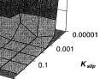 Coastal ocean hydrodynamic models are used to simulate water surface elevations and circulation in oceans, lakes, estuaries, rivers and floodplains. One such model is ADCIRC (ADvanced CIRCulation), which was originally developed more than 15 years ago and which is used for a variety of purposes, including naval fleet operations, storm surge predictions, and larvae transport. ADCIRC assumed fixed land boundaries until a wetting and drying algorithm was implemented in 1995. However, this algorithm had two components that limited the performance of the model. First, nodes were required to remain “wet” or “dry” for a user-specified number of time steps before changing states. This component became restrictive in relatively flat regions, such as a flood plain, where it caused oscillations and slowed the propagation of flood waves. Second, in regions with steep bathymetry, mass balance problems and instabilities would occur when a thin film of water was allowed to flow uninterrupted. Changes based on a more physically-accurate description of the wetting and drying process were made recently to address these two problems. This paper describes the wetting and drying algorithm and those changes, and it applies the improved algorithm to an idealized domain that was designed specifically to test the two problem areas. The improved algorithm provides better stability and mass balance properties.
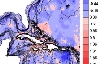 Nearly all generalized wave continuity (GWC)-based models utilize the velocity-based, non-conservative form of the momentum equation to obtain the depth-averaged changes in velocity. It has been hypothesized that a flux-based, conservative form of the momentum equation may improve accuracy and stability. Herein, we study the impact of the choice of dependent variable and form of the momentum equation in a GWC-based finite element shallow water model. The impact of this change on mass balance, stability, and accuracy (spatial and temporal) is rigorously assessed, first for 1D barotropic flows and then for 2D barotropic flows in a variety of basins. Both 1D and 2D results indicate that the conservative form improves mass balance on both global and local scales, with the most significant gains found in local mass balance in areas with steep bathymetry gradients. This is also the region where the conservative form shows an increase in local spatial accuracy. Taylor series analysis and numerical simulations indicate a strong correlation between local spatial truncation errors and local mass balance errors. Stability, temporal accuracy and global spatial accuracy do not show statistically significant changes between the two algorithms in both 1D and 2D studies.
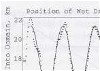 The ADvanced CIRCulation (ADCIRC) model is a finite-element hydrodynamic model based on the generalized wave continuity equation (GWCE). The model assumed fixed land boundaries until a wetting and drying algorithm was implemented by Luettich and Westerink in 1995. The algorithm uses an element-based approach, effectively turning elements on and off based on water depths and a water level gradient. While robust in some simulations, the algorithm can be subject to instabilities in the solution during highly nonlinear events. Thus, a rigorous assessment of the algorithm’s stability, accuracy, mass balance properties, and parameter sensitivity under a variety of conditions is needed. Herein, we examine these issues using a one-dimensional implementation of the wetting and drying algorithm for basins with a linear slope; future studies will examine a wider variety of real and idealized basins. We believe the results of this work will benefit similar studies in two- or three-dimensions, for users and developers of both ADCIRC and other finite element models.