Nahruma wins People’s Choice Award at EWC Symposium

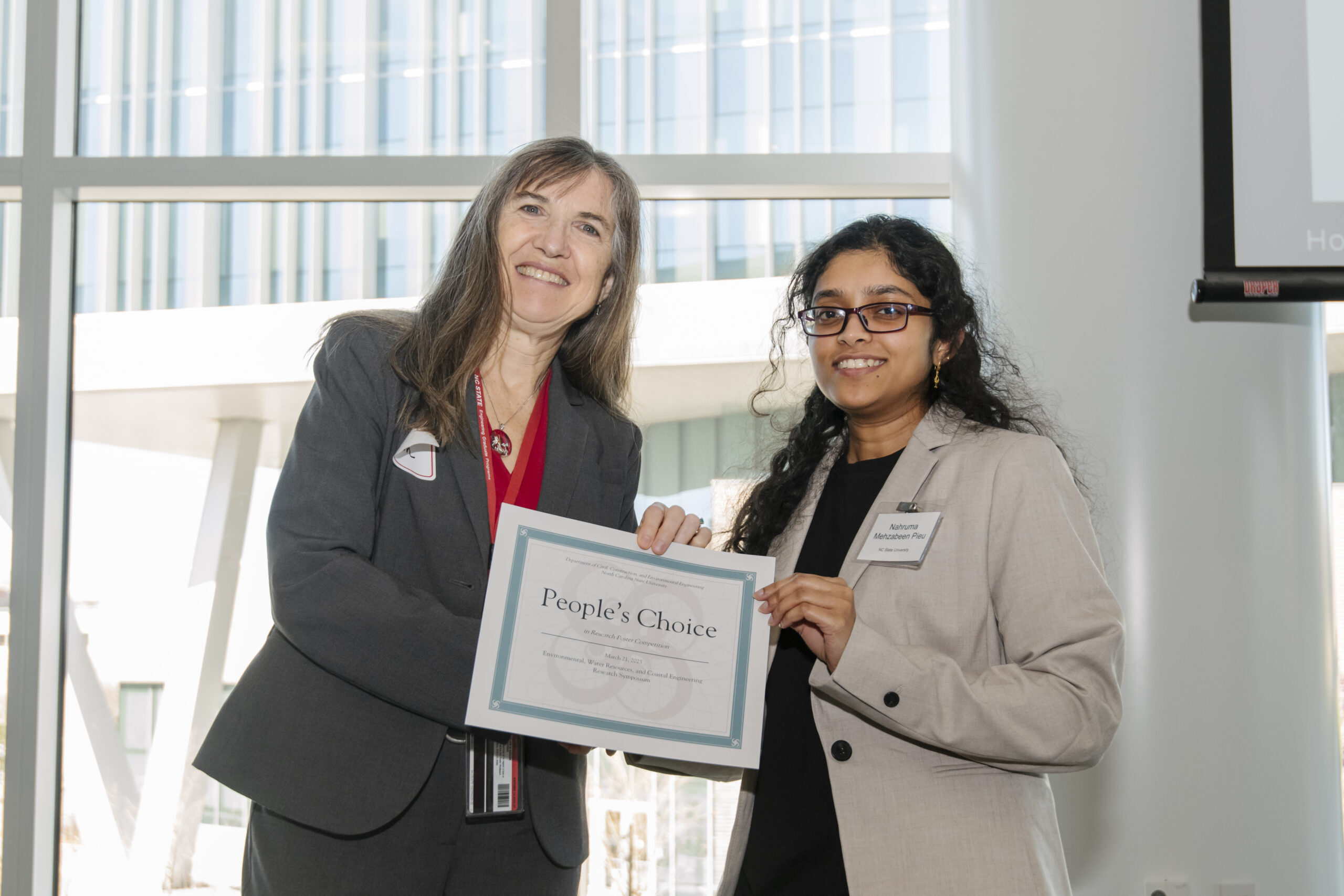
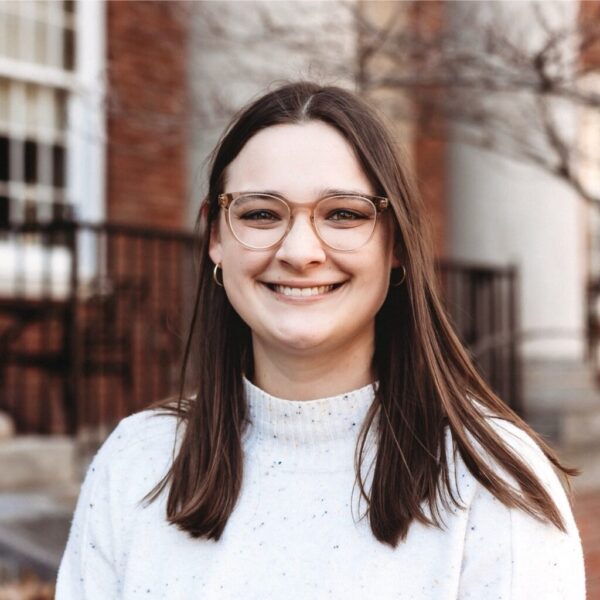
Nahruma Pieu won the People’s Choice Award at the Environmental, Water Resources, and Coastal (EWC) Engineering Graduate Research Symposium, hosted by the Department of Civil, Construction, and Environmental Engineering (CCEE) at NC State University. She was one of two presenters to win the award, which was voted by attendees at the symposium.

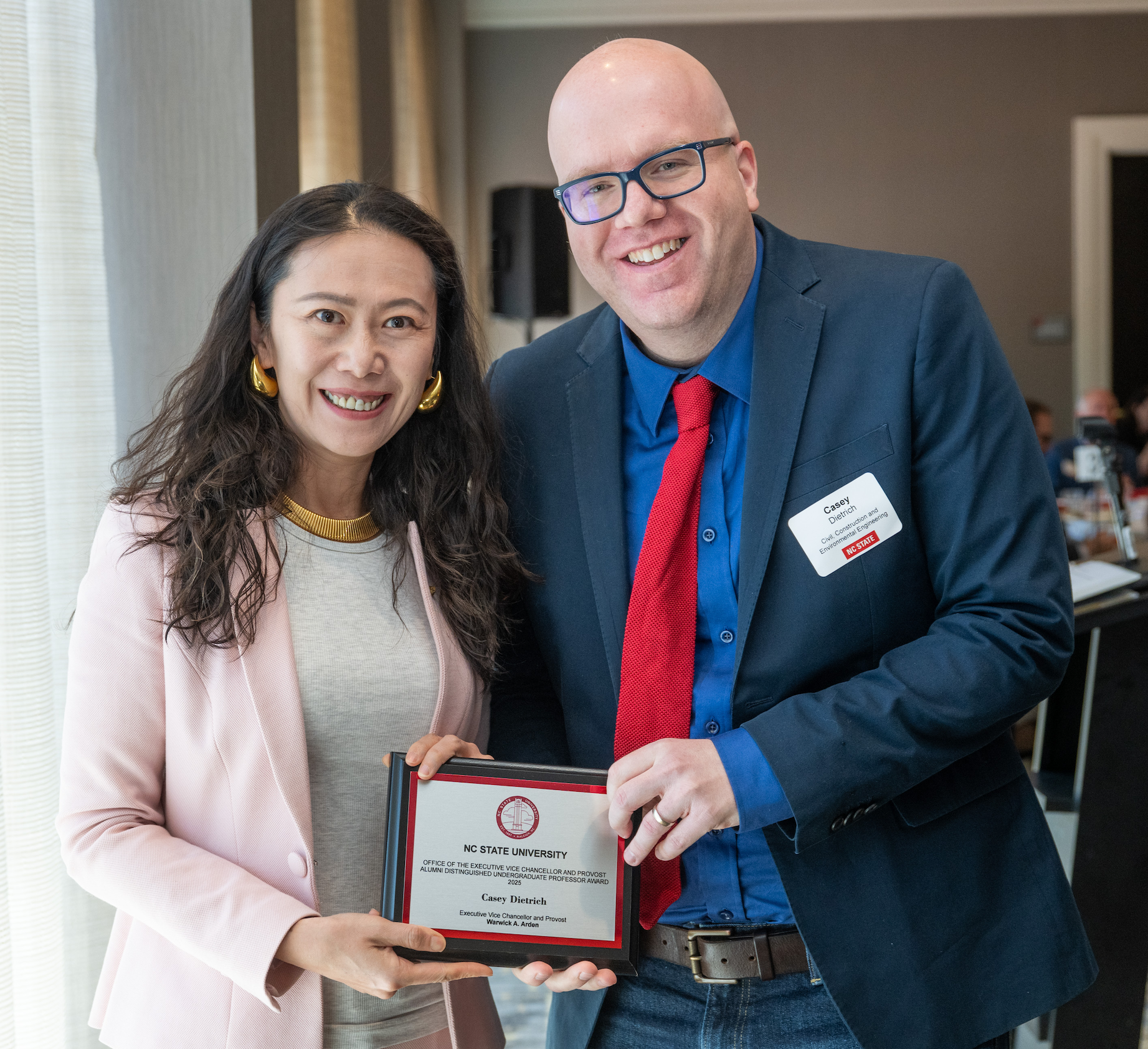
Nahruma received the People’s Choice Award from CCEE Department Head, Dr. Gibson.

“I’m thankful that my work was well received by the community,” Nahruma said. “I’m especially grateful to my advisor, Dr. Casey Dietrich, whose guidance and support made this possible. I’m also thankful to the National Oceanographic Partnership Program (NOPP) for funding my work on predicting coastal dune erosion, which will be necessary given our recent climate change scenario, as storms increase in frequency and intensity.”

Congratulations to Nahruma!

Continue reading

News: Erosion Forecast Framework

2025/01/22 – NCSU Civil, Construction, and Environmental Engineering
New technology forecasts beach and dune erosion before hurricanes strike

ncsu-engr

“Physics-based models can predict how the dune may be lowered, and how much water may flood behind it,” said Jess Gorski (MS 2023), who worked with Professor Casey Dietrich on the project. “Our forecasts can provide information about coastal change to decision makers during a storm.”

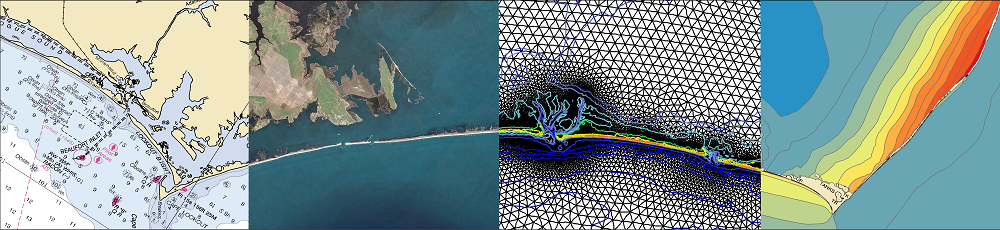
In collaboration with the USGS, CCEE researchers developed a framework for running the eXtreme Beach (XBeach) model in real time. The U.S. Gulf and Atlantic coasts are described with thousands of transects, which quantify the offshore depths and the shape of the beach and dune at intervals of 500 m to 2 km along the coast. When a storm approaches, the framework can select the transects that may be affected, and then run a few hundred simulations of the coastal erosion.

News: NC State on the Coast

2024/10/08 – NC State
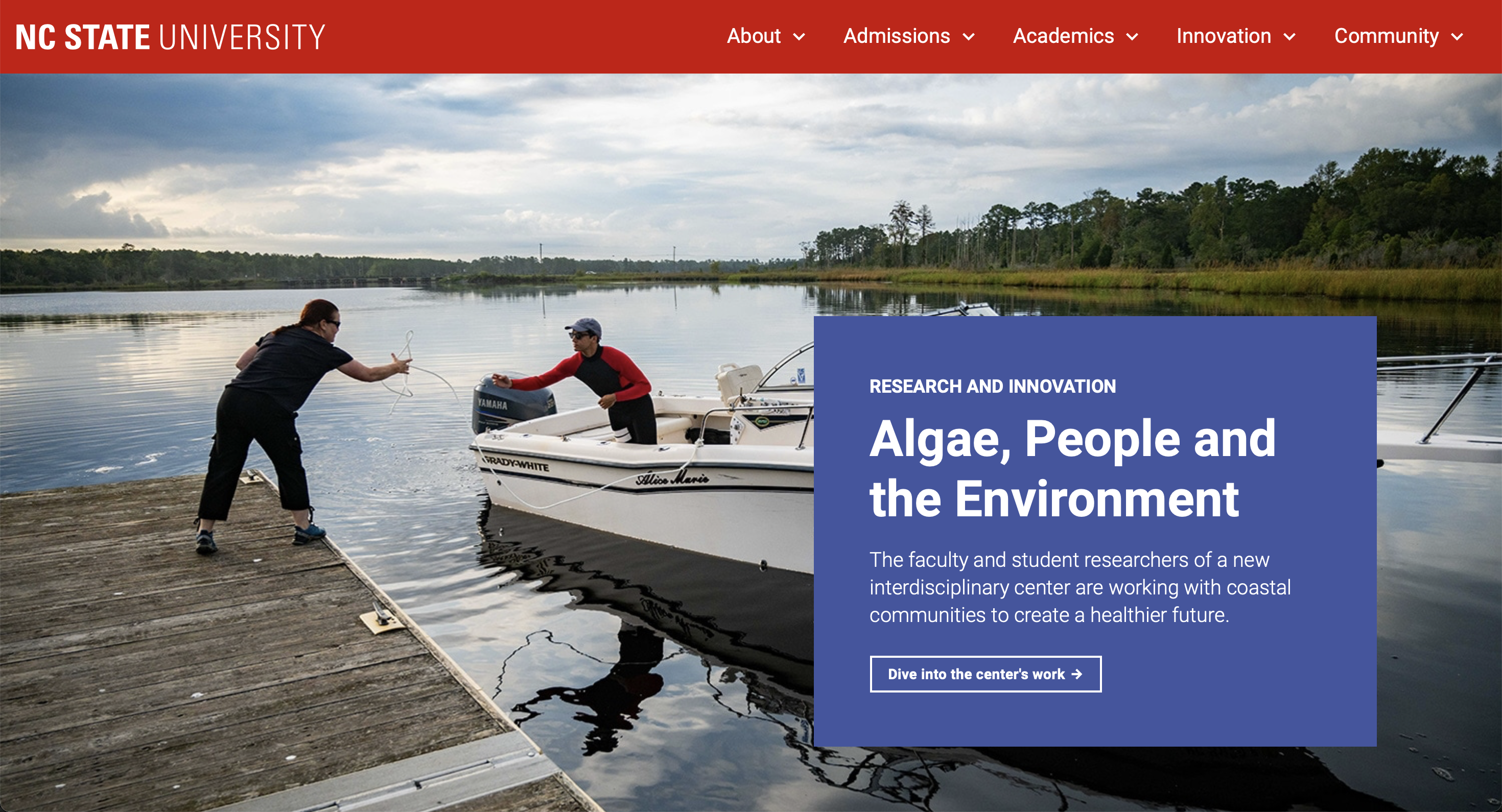
NC State faculty and students are helping to keep coastal communities healthy through the North Carolina Center for Coastal Algae, People and Environment

NC C-CAPE (and our fearless leader Astrid Schnetzer) were featured on the NC State homepage.

NC C-CAPE was featured on the NC State homepage. Lots of information and quotes from folks in the center, including great photos of our colleagues in the field and laboratory. It is fun to contribute to such a large, meaningful research effort.

ncsu-engr

“In the past few months, we’ve officially started to sample as NC C-CAPE,” [Barrett] Rose said. “It was a shock to see the magnitude of how much we were actually studying. It went from a small pilot study to a huge center effort.”

Data collection and analysis is only the first part of the work NC C-CAPE seeks to do. While harmful algal blooms are common in fresh waters across the U.S. and the world, major data gaps around the issue exist. [Astrid] Schnetzer’s data will inform NC C-CAPE’s other two projects, which focus on predicting the health risks of toxic algal blooms on mammals and humans, as well as considering how factors like climate change will affect future toxin levels in water and seafood.

“The most exciting aspect of NC C-CAPE for me is that the research doesn’t end where my expertise ends,” said Schnetzer. “What we learn from the field about algal toxins is handed to the next team to look at the bigger picture on the ecosystem level and in connection to human health.”

Tomás & Molly get their Diplomas!

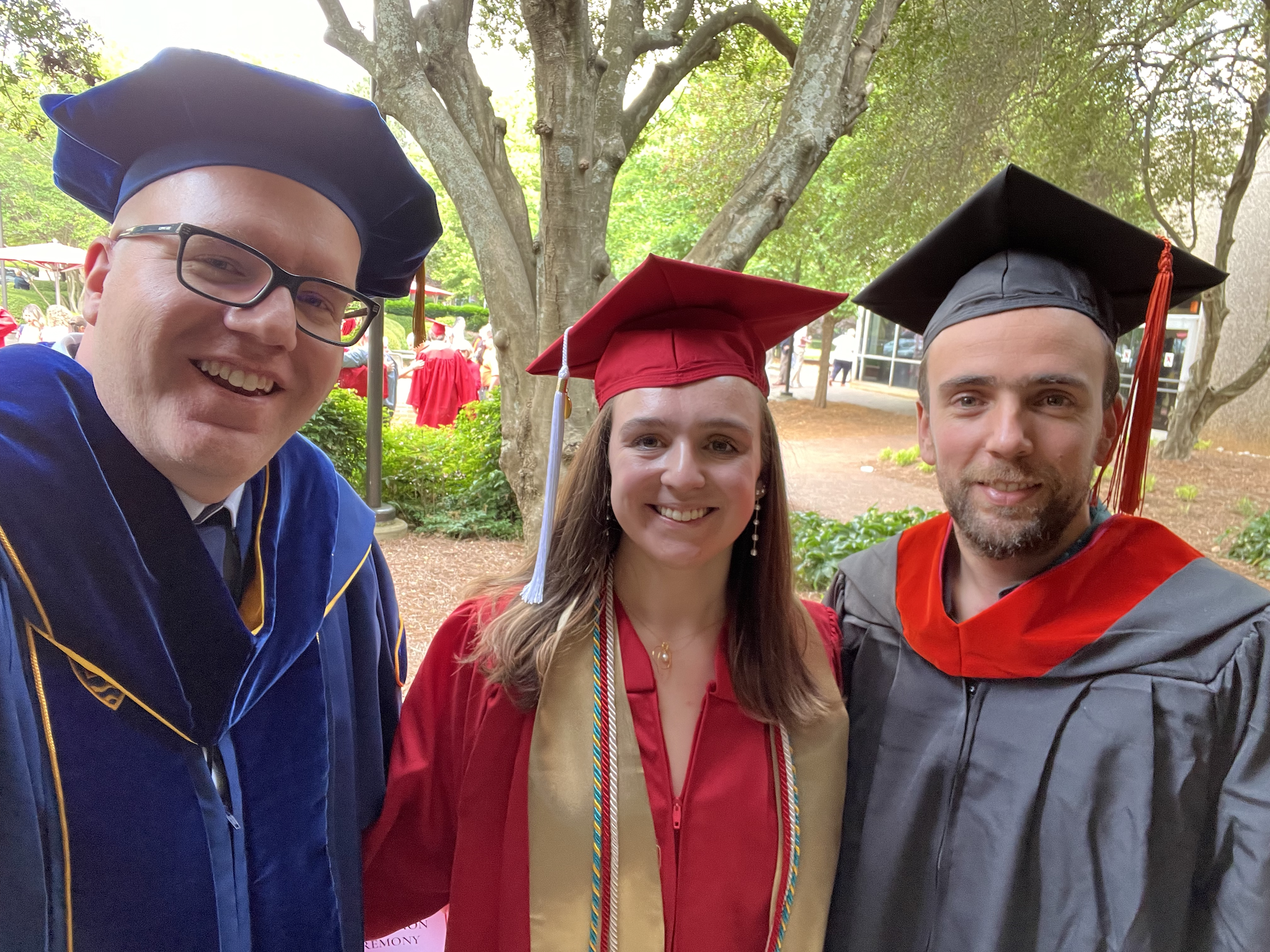
The CCHT celebrated the graduation of Tomás Cuevas López and Molly McKenna!

Tomás is now coastal scientist with DHI, but he worked remotely in Raleigh through the semester. Molly finished her BS and will pursue an MS degree and continue work in our DHS project. It was great to celebrate them at the graduation ceremony. We are proud of them!

Casey Dietrich, Molly McKenna, and Tomás Cuevas López after the graduation ceremony.

Brandon wins Outstanding Senior Award for Scholarly Achievement

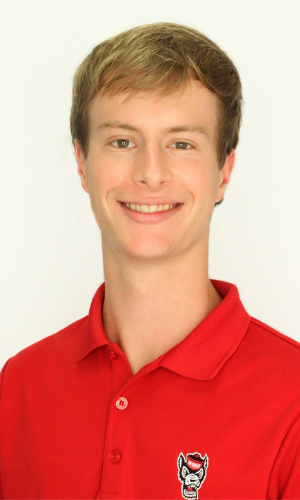
Undergraduate student Brandon Tucker won an Outstanding Senior Award for Scholarly Achievement, which recognizes exceptional academic performance including participation in undergraduate research. Brandon was among four outstanding seniors recognized by our department.

[H]he continued undergraduate research as part of the Coastal and Computational Hydraulics Team with Associate Professor Casey Dietrich and graduate student Tomás [Cuevas] López. The project was related to predictions of coastal flooding due to hurricanes.

“I helped run more than 1 million CPU hours of hurricane models to train our machine-learning model called Concorde, which can predict storm-driven flooding in seconds,” Tucker explained. “I also created detailed Python examples for Kalpana, an intermediary model used by researchers across the country.”

“This was a lot of work,” Dietrich emphasized. “Each hurricane simulation can take several hours on a parallel computing cluster and generate gigabytes of data, and so it took about two months to complete the simulations. It would have taken much longer without Brandon’s help and creativity. He wrote scripts to automate the process to submit, monitor, and archive the simulations, and he contributed to a post-processing visualization script. His documentation and examples are now shared widely with all users of the software. Brandon is strong at the technical skills of computing and programming, but he also sees the larger picture and looks for ways to contribute.”

After graduation, Brandon will pursue a Master of Civil Engineering at CCEE with a focus on transportation systems, while also completing a Graduate Certification in City Design from the College of Design.

Congratulations to Brandon!

News: Oceans and Human Health Center

2024/03/19 – NCSU Civil, Construction, and Environmental Engineering
CCEE faculty to advance understanding of toxic algae blooms, protect human health as part of new NSF, NIEHS Center at NC State

ncsu-engr

Obenour will lead a project with Dietrich and Natalie Nelson (Department of Biological and Agricultural Engineering) focused on the development of models to predict the transport of cyanotoxins — toxins produced by cyanobacteria released in algae blooms — in coastal environments. The models will focus on coastal North Carolina, especially the estuaries and sounds where freshwaters mix with saline waters. With the models, researchers will evaluate where cyanotoxins may collect and where they may originate. They will also evaluate scenarios of future climate, such as how changes in temperature, river flows, and sea levels may affect the transport of cyanotoxin.

According to Obenour, “the research will protect public health by identifying cyanotoxin hotspots and by informing management actions to reduce cyanotoxin risks in the future.”

2024/02/28 – NCSU College of Sciences
NC State Receives $6.9 Million From NSF, NIEHS to Fund New Oceans and Human Health Center

ncsu-engr

NC C-CAPE will carry out three research projects. The goal of the first project is to understand the dynamics of harmful algal blooms and learn more about the presence and distribution of microcystin — a liver toxin — across the Pamlico-Albemarle Sound System, the country’s largest lagoonal estuary. They will then link spatiotemporal patterns to the contamination of seafood. The second project will define how microcystin mixtures influence mechanisms of liver toxicity in regulatory-relevant mammalian models and at-risk human populations. In the third project, researchers will work to predict microcystin distributions in water and seafood based on various environmental controls — and assess exposure risk in a changing climate. They will do so by integrating diverse data sets and coastal circulation modeling within a probabilistic modeling framework.